A softer, fuller smile, shaped by hand in a single visit.
Composite bonding repairs chips, closes small gaps and evens out uneven edges using tooth-colored resin sculpted directly onto your natural teeth. Usually no drilling, no needles and no weeks of waiting.
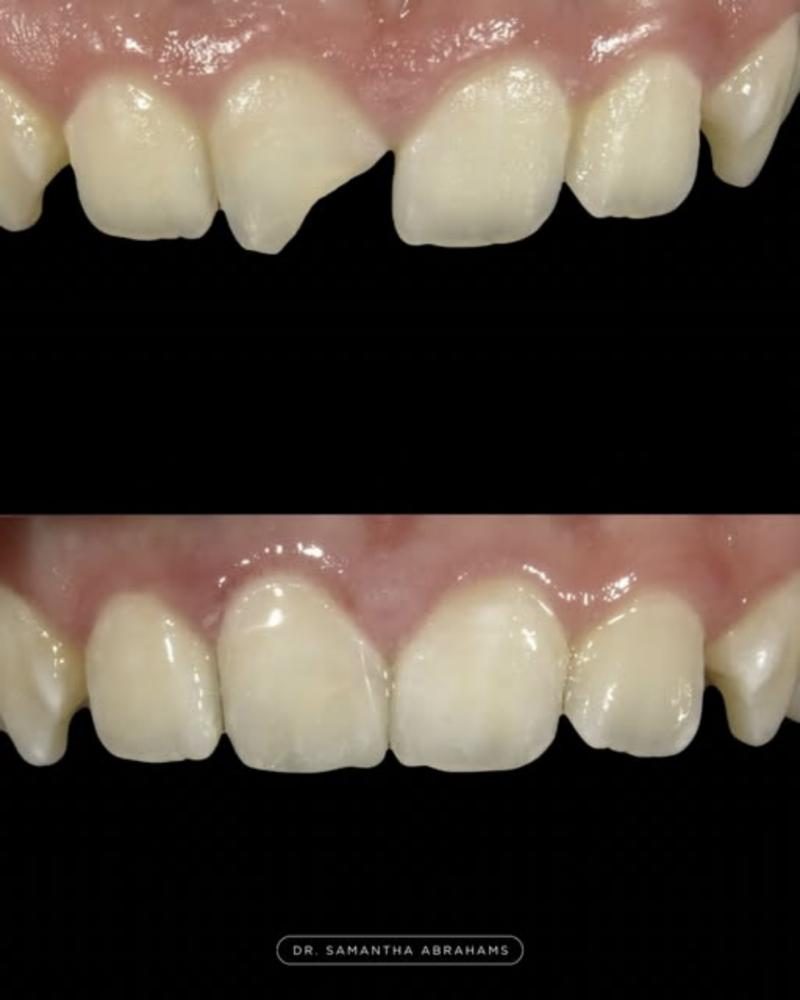
Smiles bonded by Dr. Abrahams.
Every photo shows before on top and after below. All are Dr. Abrahams’ own patients.
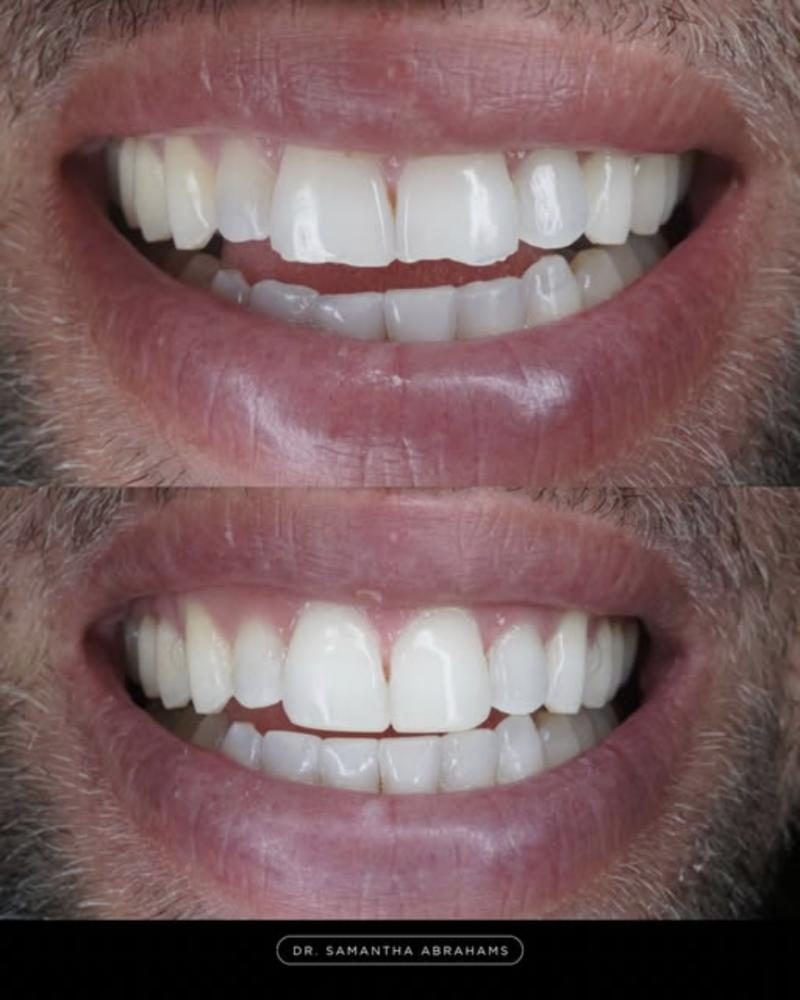
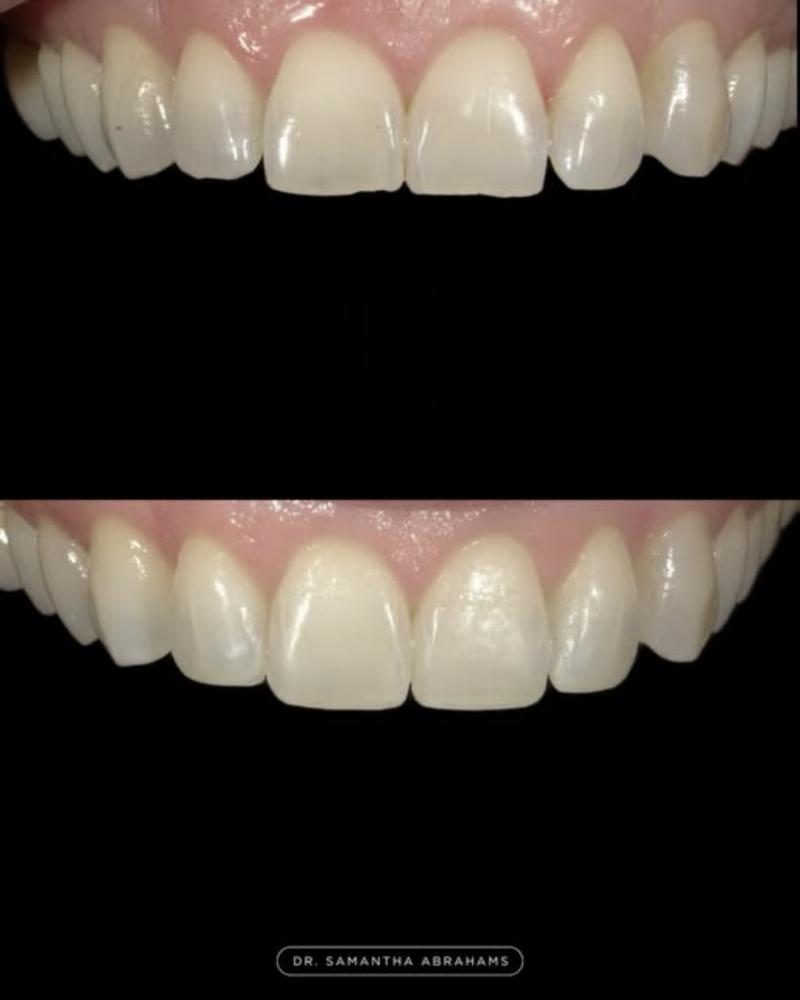
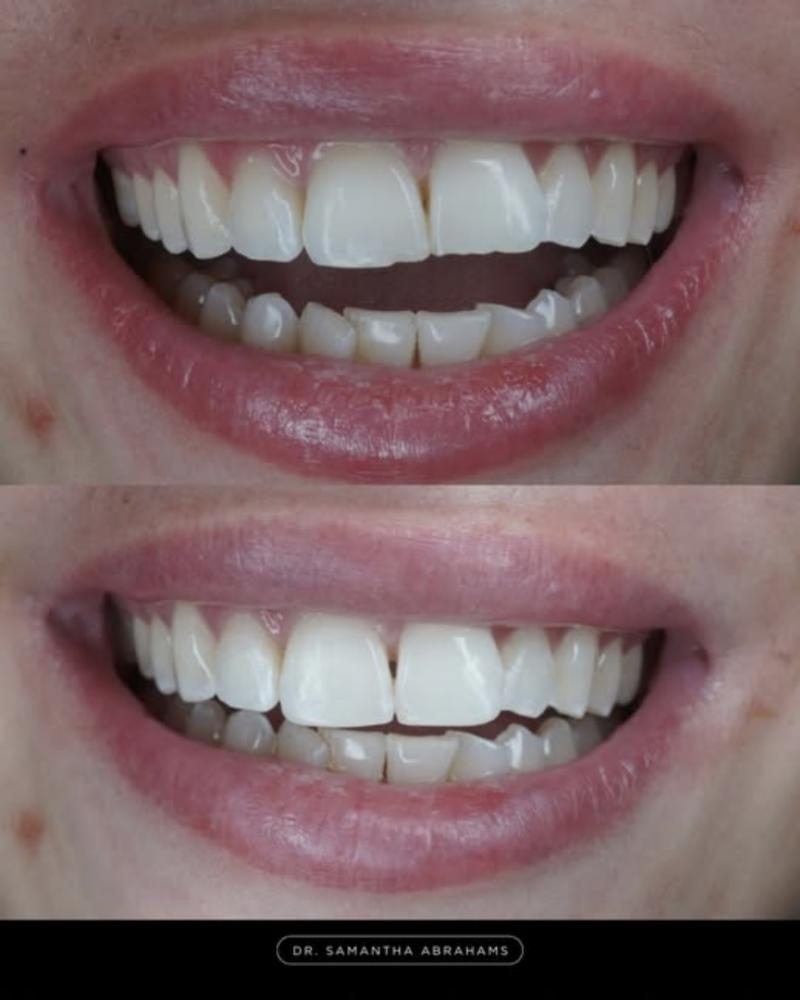
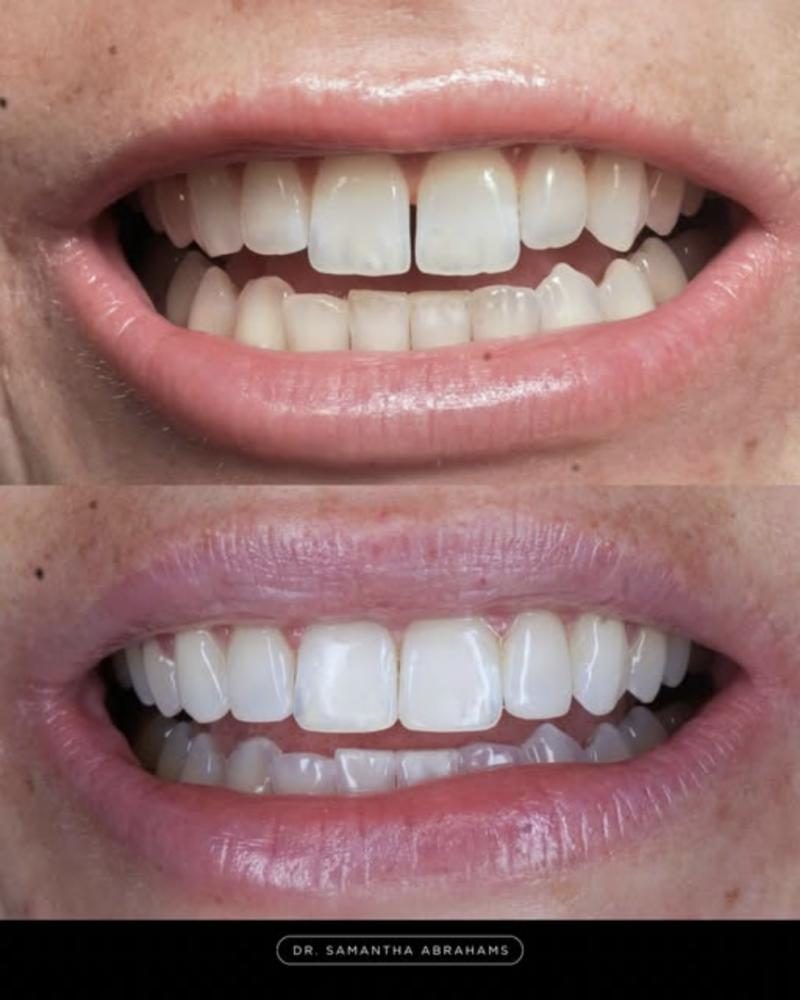
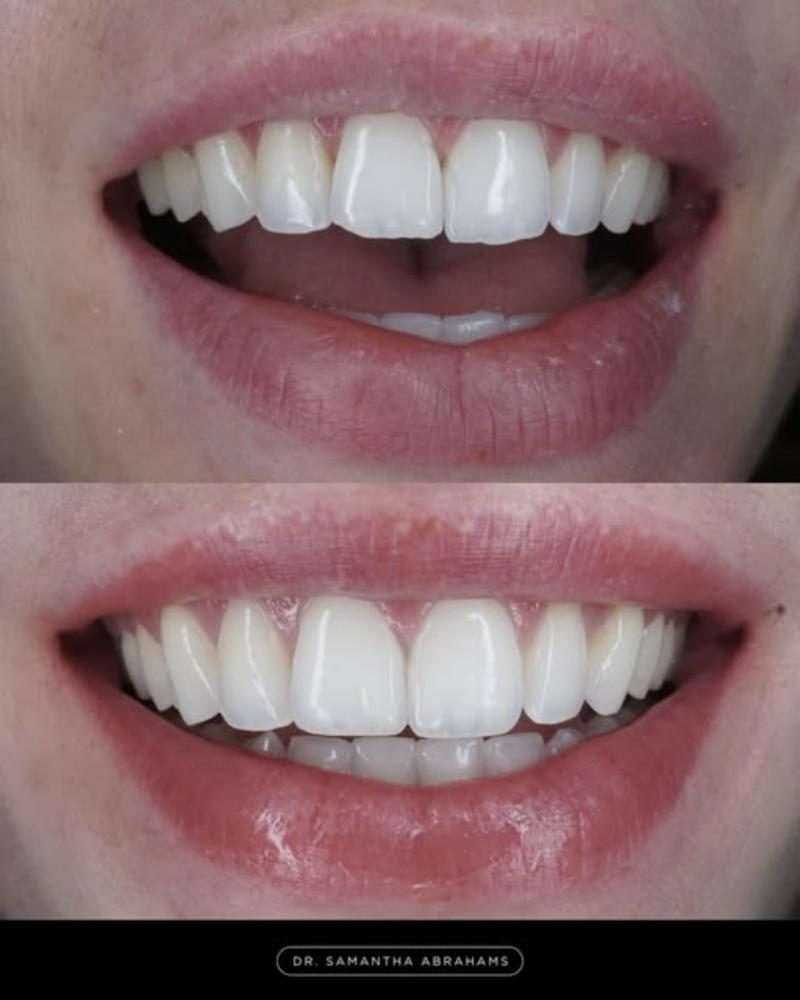
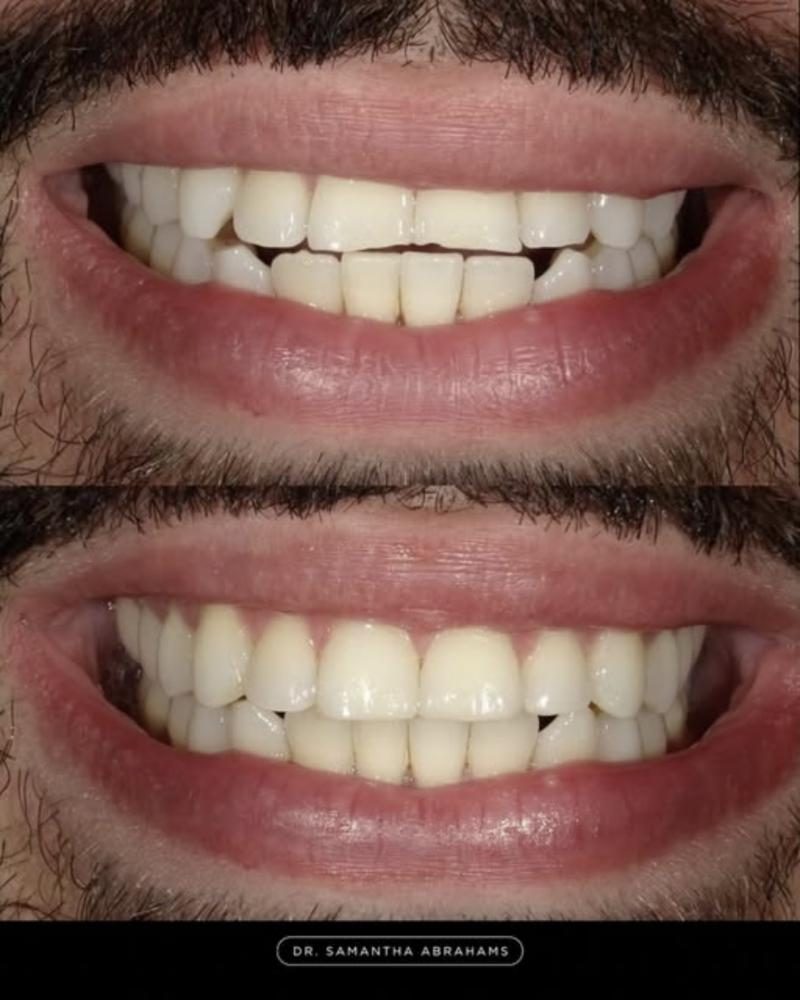
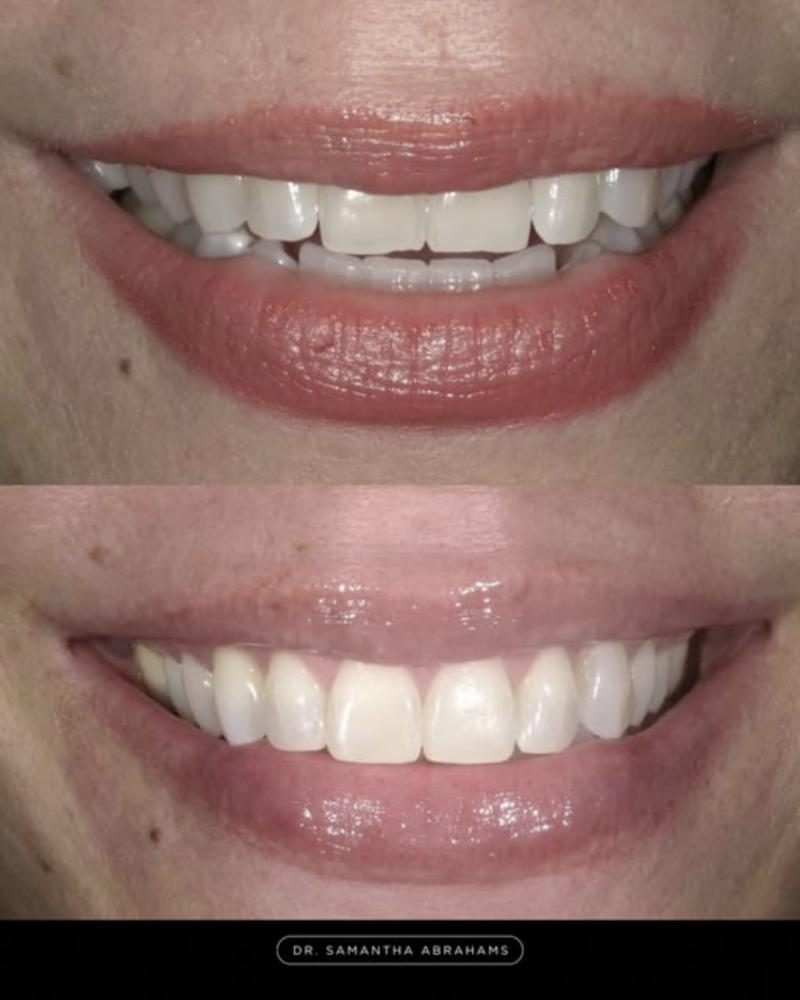

Small changes that make a big difference on camera and in person.
Bonding is a conservative, additive treatment, so it suits people who want to improve their smile while keeping as much of their natural tooth as possible.
Chipped or worn edges
Rebuild the corner you bit into, or restore length to edges that have worn down over time.
Small gaps
Close spaces between front teeth, including a gap in the middle, without braces or aligners.
Uneven shape or size
Balance a tooth that looks shorter, narrower or more pointed than its neighbor.
Spots and discoloration
Cover stubborn white spots or stains that whitening alone can’t lift.
Edge bonding
A subtle refresh: just the biting edges smoothed and squared for a cleaner smile line.
Full smile bonding
Resin across the visible smile for a more complete change, without committing to veneers.
From consultation to new smile.
Consultation
We talk through what you’d like to change, look at your bite and enamel, and confirm bonding is the right fit.
Shade matching
Resin shades are chosen against your own teeth, so the result blends in. Any whitening is best done first.
Sculpting
Resin is layered, shaped by hand and set with a curing light, one tooth at a time.
Polish
Each tooth is contoured and polished to a natural luster, and you leave the same day.
Choosing the right option for you.
Both can transform a smile. Here’s how they generally compare; your consultation will cover what suits your teeth.
| Composite bonding | Porcelain veneers | |
|---|---|---|
| Appointments | Often one | Usually two or more |
| Enamel removed | Little to none | A thin layer, typically |
| Repairs | Can be touched up chairside | Usually means replacing the veneer |
| Stain resistance | Good, with occasional polishing | Very high |
| Typical lifespan | Several years with care and upkeep | Often longer |
Dr. Samantha Abrahams, DMD
Dr. Abrahams is a San Diego dentist who loves the artistry of composite bonding: building each tooth by hand, in layers, until it looks like it was always yours. Her approach is conservative and conversational. You’ll see the plan, understand the options, and decide together.
Composite bonding, answered.
Does composite bonding hurt?
Most people find it comfortable. Because resin is added to the tooth rather than removed from it, bonding often needs no numbing at all.
How long does bonding last?
With good care, bonding commonly lasts several years before it needs a polish, repair or refresh. Avoiding biting hard objects and keeping up regular cleanings helps it last.
Will it look natural?
That’s the goal. Resin is matched to your own shade and sculpted to the shape of your face and smile, then polished so it reflects light like enamel.
Can bonded teeth stain?
Resin can pick up stain from coffee, tea, red wine and smoking more readily than porcelain. Regular polishing keeps it looking fresh. If you want whiter teeth, whiten before bonding, since resin won’t change color with whitening.
How much does composite bonding cost?
Cost depends on how many teeth are treated and how much resin each one needs. Book a consultation and we’ll give you a personalized quote.
Am I a good candidate?
Bonding suits many people with healthy teeth and gums who want to fix chips, small gaps or uneven shapes. Heavy grinding or larger alignment issues may call for a different approach, which we’ll discuss at your consultation.
Ready to see what your smile could look like?
Book a 30-minute consultation with Dr. Abrahams. We’ll talk through your goals and give you a personalized plan and quote.